|
|

Generic Name: Phenobarbitone (fee-noe-BAR-bih-tal) Rx only.
Brand Name: CROPRAM
PHENOBARBITONE 15mg / 30 mg / 60 mg & 100 mg (FOR EXPORT)
Relaxing.
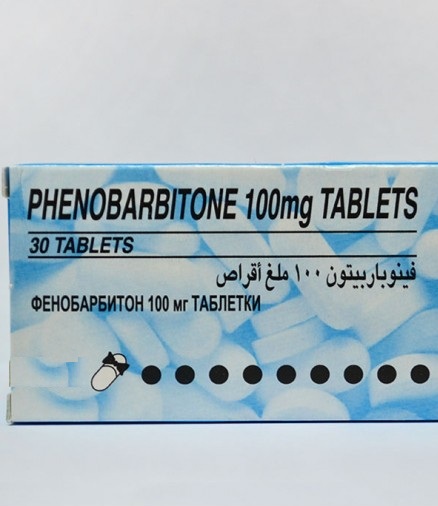
30 pills
Manufacturer - TAJ PHARMACEUTICAL INDUSTRY, INDIA
Also known as: Phenobarbitone Actavis, Phenobarbitone - Kimia
farma, Phenobarbitol, Phenobarbitone tablets USP, Primidone,
Barbit, Phenobarbitone Bristol Labs, Servira
Composition:
Active Ingredient:
Each tablet contains:
Phenobarbitone 100 mg , Excipients Q.S.
Inactive Ingredients:
Phenobarbitone 100 mg:
Starch, Talk, Croscarmellose sodium, Lactose,
Carboxymethylcellulose sodium, Microcrystalline cellulose,
Magnesium stearate, Acacia, Aerosil 200, Methyl paraben sodium.
Pharmacological Group:
Barbiturates group.
Therapeutic Activity:
Acts as a sedative and hypnotic in short-term treatment of
insomnia.
Side effects:
Rash, erythema multiforme, lumps in the armpits or groin area;
fever, swelling of the face, lips, throat and tongue, pilling
and swelling of the skin; swallowing and/or breathing
difficulties; altered numbers and type of blood cells; bone
diseases including softening, osteopenia and osteoporosis;
restlessness, confusion, unusual excitement, depression, memory
impairment, hallucinations; hyperactivity, behavioral
disturbances in children, jerky movements, jerky eye movements,
lethargy, drowsiness; low blood pressure; changes in urination,
inflammation of the liver, jaundice; Stevens-Johnson Syndrome.
Storage:
Should be stored in dark dry place below 25°C.
Manufacturer:
Taj Pharmaceutical Industries Ltd., India.
Phenobarbitone is used for:
Treating and preventing seizures, and treating sleep
disorders. It may also be used for other conditions as determined
by your doctor. Phenobarbitone is a barbiturate. It works by
depressing the central nervous system or brain. In low doses, it
causes mild sedation. As the dose increases, it can cause sleep
and even coma. As it causes the brain to relax, it also decreases
seizure activity. Phenobarbitone is a barbiturate, nonselective
central nervous system depressant which is primarily used as a
sedative hypnotic and also as an anticonvulsant in subhypnotic
doses.
Do NOT use Phenobarbitone if:
you are allergic to any ingredient in Phenobarbitone
you have a history of the blood disorder porphyria
you are taking methoxyflurane, sodium oxybate (GHB), or
voriconazole
you consume alcohol
you have liver problems or lung disease with breathing problems
Contact your doctor or health care
provider right away if any of these apply to you.
Before using Phenobarbitone:
Some medical conditions may interact with Phenobarbitone. Tell your
doctor or pharmacist if
you have any medical conditions, especially if any of the
following apply to you:
if you are pregnant, planning to become pregnant, or are
breast-feeding
if you are taking any prescription or nonprescription medicine,
herbal preparation, or dietary
supplement
if you have allergies to medicines, foods, or other substances
if you have depression, pain, breathing problems, suicidal
tendencies, or are in shock
if you have a history of substance abuse or dependence
Some MEDICINES MAY INTERACT with Phenobarbitone. Tell your
health care provider if you are taking any other medicines,
especially any of the following:
Ethanol , MAO inhibitors (eg, phenelzine), quinine, sodium oxybate
(GHB), stiripentol, or valproic acid because side effects such as
increased sedation and difficulty breathing may occur
Ethanol, methoxyflurane, orsodium oxybate because the risk of
their side effects may be increased by PhenobarbitoneAnticoagulants
(eg, warfarin), beta-blockers (eg, propranolol), clozapine,
corticosteroids (eg, hydrocortisone), cyclosporine, doxorubicin,
doxycycline, estrogens (eg, estradiol), imatinib, metronidazole,
steroidal contraceptives (eg, birth control pills), theophylline,
or voriconazole because their effectiveness may be decreased by
Phenobarbitone.
This may not be a complete list of all interactions that may
occur. Ask your health care provider if Phenobarbitone may interact
with other medicines that you take. Check with your health care
provider before you start, stop, or change the dose of any
medicine.
Why is this medication prescribed?
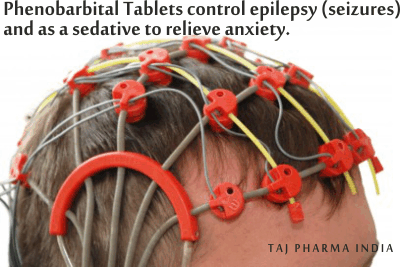
Phenobarbitone, a barbiturate, is used to control epilepsy
(seizures) and as a sedative to relieve anxiety. It is also used
for short-term treatment of insomnia to help you fall asleep.This medication is sometimes prescribed for other uses; ask your
doctor or pharmacist for more information.
How to use Phenobarbitone:
Use Phenobarbitone as directed by your doctor. Check the label on
the medicine for exact
dosing instructions. Take Phenobarbitone by mouth with or without food.Do not suddenly stop taking
Phenobarbitone or change the dose
without checking with your
doctor. If you miss a dose of Phenobarbitone, take it as soon as
possible. If it is almost time for your
next dose, skip the missed dose and go back to your regular dosing
schedule. Do not take 2
doses at once.
ASK YOUR HEALTH CARE PROVIDER ANY
QUESTIONS YOU MAY HAVE ABOUT HOW
TO USE Phenobarbitone. IMPORTANT SAFETY INFORMATION:
Side effects from Phenobarbitone may occur and include:
 drowsiness
headache
dizziness
depression
excitement (especially in children)
upset stomach
omitting

OTHER DETAIL INFORMATION :
Phenobarbitone, a long-acting barbiturate, is a central nervous
system depressant. In ordinary doses, the drug acts as a sedative
and anticonvulsant. Its onset of action occurs within 30 minutes,
and the duration of action ranges from 5 to 6 hours. It is
detoxified in the liver.
Phenobarbitone is indicated for use as a sedative or
anticonvulsant.
Phenobarbitone is contraindicated in patients who are
hypersensitive to barbiturates. In such patients, severe hepatic
damage can occur from ordinary doses and is usually associated
with dermatitis and involvement of parenchymatous organs. A
personal or familial history of acute intermittent porphyria
represents one of the few absolute contraindications to the use of
barbiturates. Phenobarbitone is also contraindicated in patients
with marked impairment of liver function, or respiratory disease
in which dyspnea or obstruction is evident. It should not be
administered to persons with known previous addiction to the
sedative/hypnotic group, since ordinary doses may be ineffectual
and may contribute to further addiction.
|
IN SMALL DOSES, THE BARBITURATES MAY
INCREASE THE REACTION TO PAINFUL STIMULI. TAKEN BY THEMSELVES, THE
BARBITURATES CANNOT BE RELIED UPON TO RELIEVE PAIN OR EVEN TO
PRODUCE SEDATION OR SLEEP IN THE PRESENCE OF SEVERE PAIN. |
Barbiturates induce liver microsomal enzyme activity. This
accelerates the biotransformation of various drugs and is probably
part of the mechanism of the tolerance encountered with
barbiturates. Phenobarbitone, therefore, should be used with
caution in patients with decreased liver function. This drug
should also be administered cautiously to patients with a history
of drug dependence or abuse (see DRUG ABUSE AND DEPENDENCE ).
 Oral Sedative Dose, Adults – 30 to 120 mg daily in 2 or 3 divided
doses. Children – 6 mg/kg of body weight daily in 3 divided doses.
Oral Sedative Dose, Adults – 30 to 120 mg daily in 2 or 3 divided
doses. Children – 6 mg/kg of body weight daily in 3 divided doses.
Oral Hypnotic Dose, Adults – 100 to 320 mg.
Oral Anticonvulsant Dose, Adults – 50 to 100 mg 2 or 3 times
daily.
Children – 15 to 50 mg 2 or 3 times daily.
Phenobarbitone Tablets USP 15 mg: White, round, unscored,
compressed tablet imprinted “West- ward 445”.
Bottles of 1000 tablets.
Phenobarbitone Tablets USP 30 mg: White, round, scored, compressed
tablet imprinted “West- ward 450”.
Bottles of 1000 tablets.
Bottles of 5000 tablets.
Phenobarbitone Tablets USP 60 mg: White, round, unscored,
compressed tablet imprinted “WW- 455”.
Bottles of 100 tablets. Bottles of 1000 tablets.
Phenobarbitone Tablets USP 100 mg: White, round, scored, compressed
tablet imprinted “WW- 458”.
Bottles of 100 tablets. Bottles of 1000 tablets.
Store at 20-25°C (68-77°F) [See USP Controlled Room Temperature].
Protect from light and moisture.
Dispense in a tight, light-resistant container as defined in the
USP using a child-resistant closure
Phenobarbitone may be habit
forming:
Tolerance, psychological dependence, and physical dependence
may occur especially following prolonged use of high doses of
Phenobarbitone. As tolerance to Phenobarbitone develops, the
amount needed to maintain the same level of intoxication
increases; tolerance to a fatal dosage, however, does not
increase more than two-fold. As this occurs, the margin between
an intoxicating dosage and fatal dosage becomes smaller.
Symptoms of acute intoxication with Phenobarbitone include
unsteady gait, slurred speech, and sustained nystagmus. Mental
signs of chronic intoxication include confusion, poor judgment,
irritability, insomnia, and somatic complaints.
Symptoms of Phenobarbitone dependence are similar to those of
chronic alcoholism. If an individual appears to be intoxicated
with alcohol to a degree that is radically disproportionate to
the amount of alcohol in his or her blood, the use of
barbiturates should be suspected. The lethal dose of a
barbiturate is far less if alcohol is also ingested. The
symptoms of Phenobarbitone withdrawal can be severe and may cause
death. Minor withdrawal symptoms may appear 8 to 12 hours after
the last dose of Phenobarbitone. These symptoms usually appear in
the following order: anxiety, muscle twitching, tremor of hands
and fingers, progressive weakness, dizziness, distortion in
visual perception, nausea, vomiting, insomnia, and orthostatic
hypotension. Major withdrawal symptoms (convulsions and
delirium) may occur within 16 hours and last up to 5 days after
abrupt cessation of this drug. Intensity of withdrawal symptoms
gradually declines over a period of approximately 15 days.
Individuals susceptible to Phenobarbitone abuse and dependence
include alcoholics and opiate abusers, as well as other
sedative- hypnotic and amphetamine abusers.
Drug dependence on Phenobarbitone arises from repeated
administration of the barbiturate or an agent with barbiturate-
like effect on a continuous basis, generally in amounts
exceeding therapeutic dose levels. The characteristics of drug
dependence on Phenobarbitone include: (a) a strong desire or need
to continue taking the drug, (b) a tendency to increase the
dose, (c) a psychic dependence on the effects of the drug
related to subjective and individual appreciation of those
effects, and (d) a physical dependence on the effects of the
drug requiring its presence for maintenance of homeostasis and
resulting in a definite, characteristic, and self-limited
abstinence syndrome when the drug is withdrawn.
Treatment of Phenobarbitone dependence consists of cautious and
gradual withdrawal of the drug. One method involves substituting
a 30 mg dose of Phenobarbitone for each 100 to 200 mg dose that
the patient has been taking. The total daily amount of
Phenobarbitone is then administered in 3 to 4 divided doses, not
to exceed 600 mg daily. Should signs of withdrawal occur on the
first day of treatment, a loading dose of 100 to 200 mg of
Phenobarbitone may be administered IM in addition to the oral
dose. After stabilization on Phenobarbitone, the total daily dose
is decreased by 30 mg a day as long as withdrawal is proceeding
smoothly. A modification of this regimen involves initiating
treatment at the patient's regular dosage level and decreasing
the daily dosage by 10 percent if tolerated by the patient.
Infants physically dependent on Phenobarbitone may be given a
lower dose of Phenobarbitone at 3 to 10 mg/kg/day. After
withdrawal symptoms (hyperactivity, disturbed sleep, tremors,
hyperreflexia) are relieved, the dosage of Phenobarbitone should
be gradually decreased and completely withdrawn over a 2-week
period.
DRUG INTERACTIONS
Most reports of clinically significant
drug interactions occurring with the barbiturates have involved
Phenobarbitone.
1. Anticoagulants: Phenobarbitone lowers the plasma levels of dicumarol (name previously used: bishydorxycoumarin) and causes
a decrease in anticoagulant activity as measured by the
prothrombin time. Phenobarbitone can induce hepatic microsomal
enzymes resulting in increased metabolism and decreased
anticoagulant response of oral anticoagulants (e.g., warfarin,
acenocournarol, dicumarol, and phenprocoumon). Patients
stabilized on anticoagulant therapy may require dosage
adjustments if Phenobarbitone is added to or withdrawn from their
dosage regimen.
2. Corticosteroids: Phenobarbitone appears to enhance the
metabolism of exogenous corticosteroids probably through the
induction of hepatic microsomal enzymes. Patients stabilized on
corticosteroid therapy may require dosage adjustments if
Phenobarbitone is added to or withdrawn from their dosage
regimen.
3. Griseofulvin: Phenobarbitone appears to interfere with the
absorption of orally administered griseofulvin, thus decreasing
its blood level. The effect of the resultant decreased blood
levels of griseofulvin on therapeutic response has not been
established. However, it would be preferable to avoid
concomitant administration of these drugs.
4. Doxycycline: Phenobarbitone has been shown to shorten the
half- life of doxycycline for as long as 2 weeks after
barbiturate therapy is discontinued. This mechanism is probably
through the induction of hepatic microsomal enzymes that
metabolize the antibiotic. If Phenobarbitone and doxycycline are
administered concurrently, the clinical response to doxycycline
should be monitored closely.
5. Phenytoin, sodium valproate, valproic acid: The effect of
Phenobarbitone on the metabolism of phenytoin appears to be
variable. Some investigators report an accelerating effect,
while others report no effect. Because the effect of
Phenobarbitone on the metabolism of phenytoin is not predictable,
phenytoin and Phenobarbitone blood levels should be monitored
more frequently if these drugs are given concurrently. Sodium
valproate and valproic acid appear to decrease Phenobarbitone
metabolism; therefore, Phenobarbitone blood levels should be
monitored and appropriate dosage adjustments made as indicated.
6. Central nervous system depressants: The concomitant use of
other central nervous system depressants including other
sedatives or hypnotics, antihistamines, tranquilizers, or
alcohol, may produce additive depressant effects.
7. Monoamine oxidase inhibitors (MAOIs): MAOIs prolong the
effects of Phenobarbitone probably because metabolism of the
Phenobarbitone is inhibited.
8. Estradiol, estrone, progesterone and other steroidal
hormones: Pretreatment with or concurrent administration of
Phenobarbitone may decrease the effect of estradiol by increasing
its metabolism. There have been reports of patients treated with
antiepileptic drugs (e.g., Phenobarbitone) who became pregnant
while taking oral contraceptives. An alternate contraceptive
method might be suggested to women taking Phenobarbitone.
WARNINGS
1. Habit forming: Phenobarbitone may be habit forming.
Tolerance, psychological and physical dependence may occur with
continued use. (See ADVERSE REACTIONS: Drug Abuse and
Dependence). To minimize the possibility of overdosage or the
development of dependence, the prescribing and dispensing of
sedative-hypnotic barbiturates should be limited to the amount
required for the interval until the next appointment. Abrupt
cessation after prolonged use in the dependent person may result
in withdrawal symptoms, including delirium, convulsions, and
possibly death. Phenobarbitone should be withdrawn gradually.
(See ADVERSE REACTIONS: Drug Abuse and Dependence.)
2. Acute or chronic pain: Caution should be exercised when
Phenobarbitone is administered to patients with acute or chronic
pain, because paradoxical excitement could be induced or
important symptoms could be masked. However, the use of
Phenobarbitone as a sedative in the postoperative surgical period
and as an adjunct to cancer chemotherapy is well established.
3. Use in pregnancy: Phenobarbitone can cause fetal damage when
administered to a pregnant woman. Retrospective case-controlled
studies have suggested a connection between the maternal
consumption of Phenobarbitone and higher than expected incidence
of fetal abnormalities. Following oral administration,
Phenobarbitone readily crosses the placental barrier and is
distributed throughout fetal tissues with highest concentrations
found in the placenta, fetal liver, and brain.
Withdrawal symptoms occur in infants born to mothers who receive
Phenobarbitone throughout the last trimester of pregnancy. (See
ADVERSE REACTIONS: Drug Abuse and Dependence.) If this drug is
used during pregnancy, or if the patient becomes pregnant while
taking this drug, the patient should be apprised of the
potential hazard to the fetus.
4. Synergistic effects: The concomitant use of alcohol or other
CNS depressants may produce additive CNS depressant effects.
PRECAUTIONS
General
Phenobarbitone may be habit forming. Tolerance and
psychological and physical dependence may occur with continuing
use. (See ADVERSE REACTIONS: Drug Abuse and Dependence.)
Phenobarbitone should be administered with caution, if at all, to
patients who are mentally depressed, have suicidal tendencies,
or a history of drug abuse. Elderly or debilitated patients may
react to Phenobarbitone with marked excitement, depression, and
confusion. In some persons, Phenobarbitone repeatedly produces
excitement rather than depression.
In patients with hepatic damage, Phenobarbitone should be
administered with caution and initially reduced doses.
Phenobarbitone should not be administered to patients showing the
premonitory signs of hepatic coma.
Laboratory Tests
Prolonged therapy with Phenobarbitone should be accompanied by
periodic laboratory evaluation of organ systems, including
hematopoietic, renal, and hepatic systems (See General - above
and ADVERSE REACTIONS.)
Carcinogenesis
Human-data: A retrospective study of 84 children with brain
tumors matched to 73 normal controls and 78 cancer controls
(malignant disease other than brain tumors) suggested an
association between exposure to barbiturates prenatally and an
increased incidence of brain tumors.
Pregnancy
Teratogenic effects: Pregnancy Category D. (See WARNINGS Use in
Pregnancy.)
Nonteratogenic effects: Reports of infants suffering from long-
term Phenobarbitone exposure in utero included the acute
withdrawal syndrome of seizures and hyperirritability from birth
to a delayed onset of up to 14 days. (See ADVERSE REACTIONS:
Drug Abuse and Dependence.)
Labor and Delivery
Hypnotic doses of Phenobarbitone do not appear to significantly
impair uterine activity during labor. Full anesthetic doses of
Phenobarbitone decrease the force and frequency of uterine
contractions. Administration of sedative-hypnotic Phenobarbitone
to the mother during labor may result in respiratory depression
in the newborn. Premature infants are particularly susceptible
to the depressant effects of Phenobarbitone. If Phenobarbitone is
used during labor and delivery, resuscitation equipment should
be available.
Data are currently not available to evaluate the effect of
Phenobarbitone on the later growth, development, and functional
maturation of the child.
Nursing Mothers
Caution should be exercised when Phenobarbitone is administered
to a nursing woman since small amounts of Phenobarbitone are
excreted in the milk.
 |
|




 Quality